What's included
- Crown thinning to open the canopy to light and wind
- Crown raising for clearance over drives, roofs, and walkways
- Dead, broken, and rubbing limb removal
- Cuts made at the branch collar — no flush cuts, no stubs
- Full chip and haul-off, or chips left for your beds
How it works
- 1Walk the tree with you and agree on exactly which limbs go
- 2Set climbing lines or spot the lift — no spikes on a tree that is staying
- 3Cut and lower in sections so nothing free-falls onto your lawn
- 4Chip, rake, and blow the work zone
- 5Final walk-through before we pull out
When to book it
Late winter is ideal — most species take light trimming year-round
Dormant trees seal cuts faster, and a bare canopy makes structural problems obvious. Oaks and elms are the exception: we avoid cutting them April through July to stay clear of beetle season and the diseases those beetles carry.
Pricing
$250 – $1,200
Height, how much deadwood is up there, and whether we can reach it from the ground or have to climb. Every job gets a written, all-inclusive number before we start — no add-ons at the end, and the quote holds for 30 days.
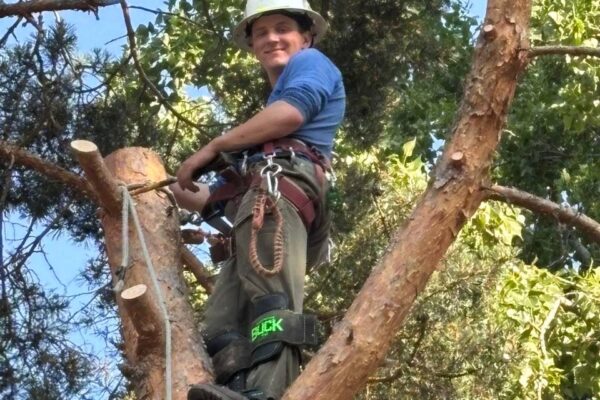
Recent tree trimming work
Questions we get about tree trimming
-
How much can you safely take off a tree at once?
No more than about a quarter of the living canopy in a single season, and less on an older or stressed tree. Anyone offering to "cut it way back" is describing topping, which we do not do — it invites rot and forces weak regrowth that fails in the next windstorm.
-
Will trimming fix a tree that is leaning?
Usually not. A lean is a root or soil problem, and thinning the canopy only changes how wind loads it. We will tell you honestly whether you are looking at a trim, a cabling job, or a removal.
-
Do you trim branches over my roof or power line?
Over your roof, yes — one of the most common calls we get. The line running from the pole to your house we can usually work around; anything on the primary utility side has to go through Avista first, and we will tell you who to call.
-
What happens to the branches?
They go through the chipper and leave with us at no extra cost. If you want the chips for mulch or the larger rounds for firewood, say so before we start and we will stack them where you want them.